6 Insane Car Facts That Sound Fake But Are 100% True

Updated: 3 days ago
Buckle up — literally, you'll see why in a second — because we just went down a rabbit hole of automotive trivia and came out the other side with our minds blown. These are the facts that'll make you the most interesting person at Cars & Coffee this weekend.
1. Volvo Invented The Seatbelt That Saves Your Life — And Gave It Away For Free
In 1959, Volvo engineer Nils Bohlin patented the modern three-point seatbelt — the exact design still buckled into nearly every car on Earth today. Instead of locking it up and cashing in, Volvo opened the patent to every other automaker on the planet, for free, because they decided saving lives mattered more than market share.
The estimated result? Somewhere north of a million lives saved since. One decision in a Swedish engineering office, still clicking into place every single day.
2. The World's Best-Selling Car Isn't What You Think
Forget the F-150. The best-selling nameplate of all time, worldwide, is the Toyota Corolla — with more than 50 million units sold since 1966. That's not a typo. It's basically appliance-grade reliability turned into a global phenomenon, one unglamorous commuter at a time.
3. Your Car Didn't Always Run On 12 Volts
Up until the mid-1950s, most cars rolled with a 6-volt electrical system. As engines got bigger and compression ratios climbed, 6V starters just couldn't crank the fire anymore, so the industry collectively jumped to 12V — the standard that's still under your hood (electric vehicles aside) seven decades later.
4. You're Probably Checking Your Oil Wrong
The dipstick has barely changed in over 100 years of automotive engineering — but most people butcher the reading. For an accurate check, your engine needs to be warm, recently shut off, and parked on level ground for a few minutes before you pull it. Pull it cold on a slope and that "low oil" panic might just be bad geometry.
Keep your garage honest with the Humbl Hand-Held Oil Squirt Can — perfect for precise top-offs once you've actually got the real number.
5. That Mercedes Hood Star Is A Safety Feature
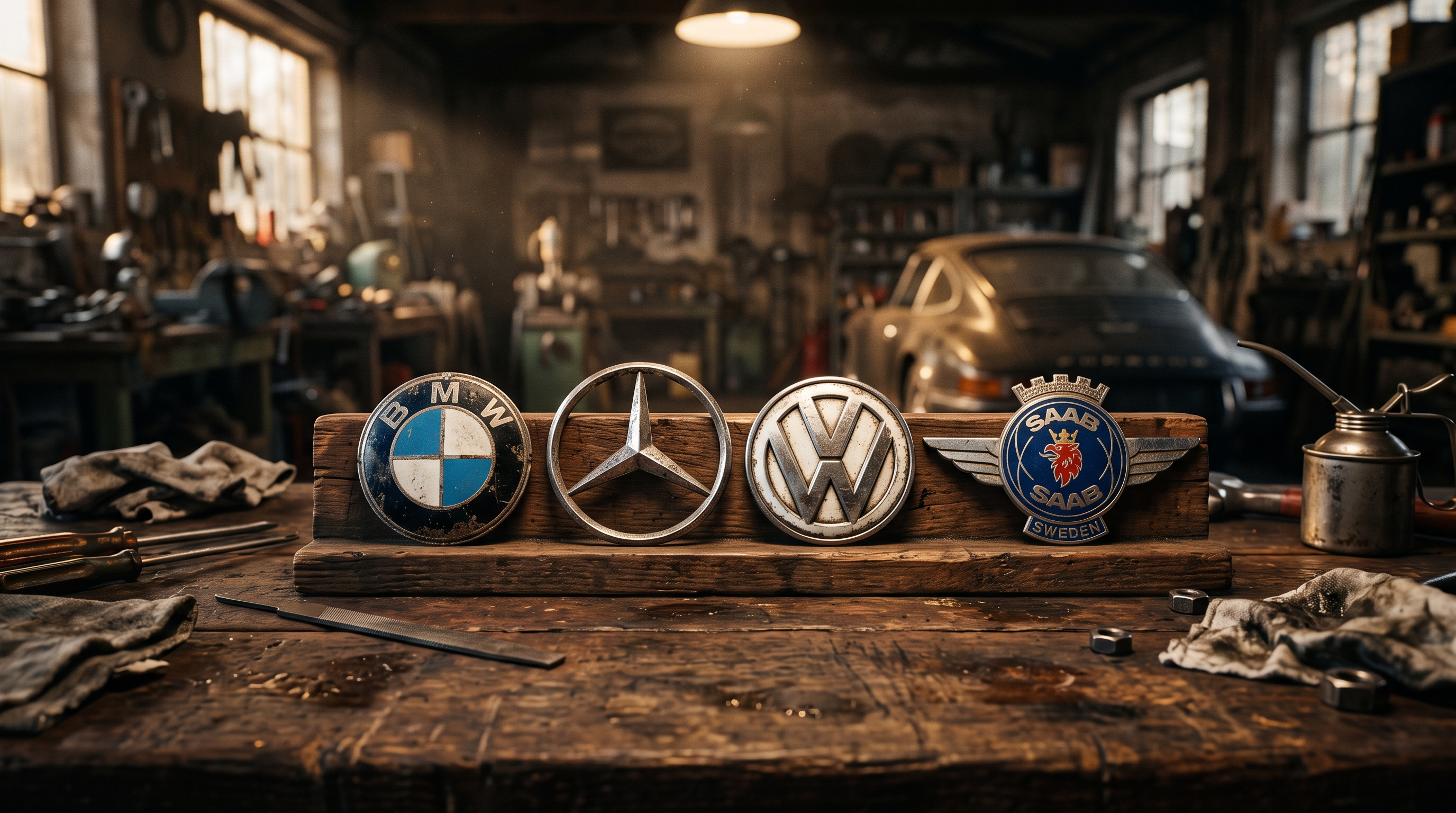
The three-pointed star mounted proudly on the hood of classic and modern Mercedes-Benz models isn't just flexing — on many models it's engineered to fold down or snap off on impact, specifically to reduce injury to pedestrians in a collision. Form, function, and a century of engineering pride, all in one tiny chrome emblem.
Running an older Benz and need that iconic piece back? Check out the Mercedes-Benz Chrome Hood Star Emblem in the shop.
6. The First Speeding Ticket Ever Issued Was For... 8 MPH
Back in 1896, a man named Walter Arnold was pulled over in Kent, England, for blazing through a village at a reckless 8 mph — four times the posted 2 mph speed limit for motor vehicles at the time. He was fined one shilling. The officer reportedly chased him down on a bicycle.
Every triple-digit speeding story in automotive history traces its roots back to that one shilling fine.
Facts sourced and cross-checked against automotive history coverage from Hagerty.
Cars are full of weird, wonderful history hiding in plain sight. Which one of these facts surprised you the most — and got any wild car trivia of your own? Drop it in the comments.
Frequently Asked Questions
What did Volvo invent in 1959 that has saved millions of lives?
In 1959, Volvo engineer Nils Bohlin patented the modern three-point seatbelt — the exact design still buckled into nearly every car on Earth today.
What is the best-selling car nameplate of all time, worldwide?
The best-selling nameplate of all time, worldwide, is the Toyota Corolla — with more than 50 million units sold since 1966.
Why should you let your engine warm up before checking the oil?
Your engine needs to be warm, recently shut off, and parked on level ground for a few minutes before you pull [the dipstick] for an accurate check.
What is the purpose of the Mercedes-Benz hood star emblem?
The three-pointed star mounted proudly on the hood of classic and modern Mercedes-Benz models isn't just flexing — on many models it's engineered to fold down or snap off on impact, specifically to reduce injury to pedestrians in a collision.


Comments