The 15-Minute Garage Fix That Silences Every Squeak, Creak, and Rattle in Your Car

Updated: Sep 9
The 15-Minute Garage Fix That Silences Every Squeak, Creak, and Rattle in Your Car
You know the sound. That embarrassing door-hinge groan when you're picking up a date, or the trunk that screeches like a haunted mansion prop every single time you load groceries. Good news: the fix costs less than your last drive-thru run and takes less time than your commercial break.
Why Your Car Sounds Like a Haunted House
Every squeak is just dry metal-on-metal (or metal-on-plastic) friction begging for lubrication. Cars have dozens of pivot points that see zero factory maintenance after they roll off the line, so over years of sun, salt, and slammed doors, the factory grease dries out and things start singing.
The Usual Suspects
Door hinges — the #1 offender, especially on high-mileage daily drivers
Trunk/hatch hinges and struts — that groan when you lift the lid
Hood hinges and the hood latch — squeaks on every bump once dry
Seat rails and recliner mechanisms — creaks when you adjust position
Weatherstripping — a different fix (silicone, not oil) but often blamed on hinges
The 15-Minute Fix
This is genuinely one of the easiest wins in DIY car care — no jack, no ramps, no special skills.
What You'll Need
A precision oil applicator (a squirt can with a needle-point spout beats a spray can — way less overspray)
A microfiber towel to catch drips and wipe excess
10 minutes of patience while things work their way in
Steps
Open every hinge point — both doors, the hood, and the trunk/hatch.
Squirt a small amount directly into the hinge pivot, not just around it. A precision nozzle is the difference between "fixed" and "now everything's covered in oil."
Work it in by opening and closing the panel 10-15 times. You'll feel the resistance drop almost immediately.
Wipe excess with your microfiber towel so it doesn't attract dust and grime.
Hit the hood latch and trunk latch mechanisms too — they're squeak culprits people always forget.
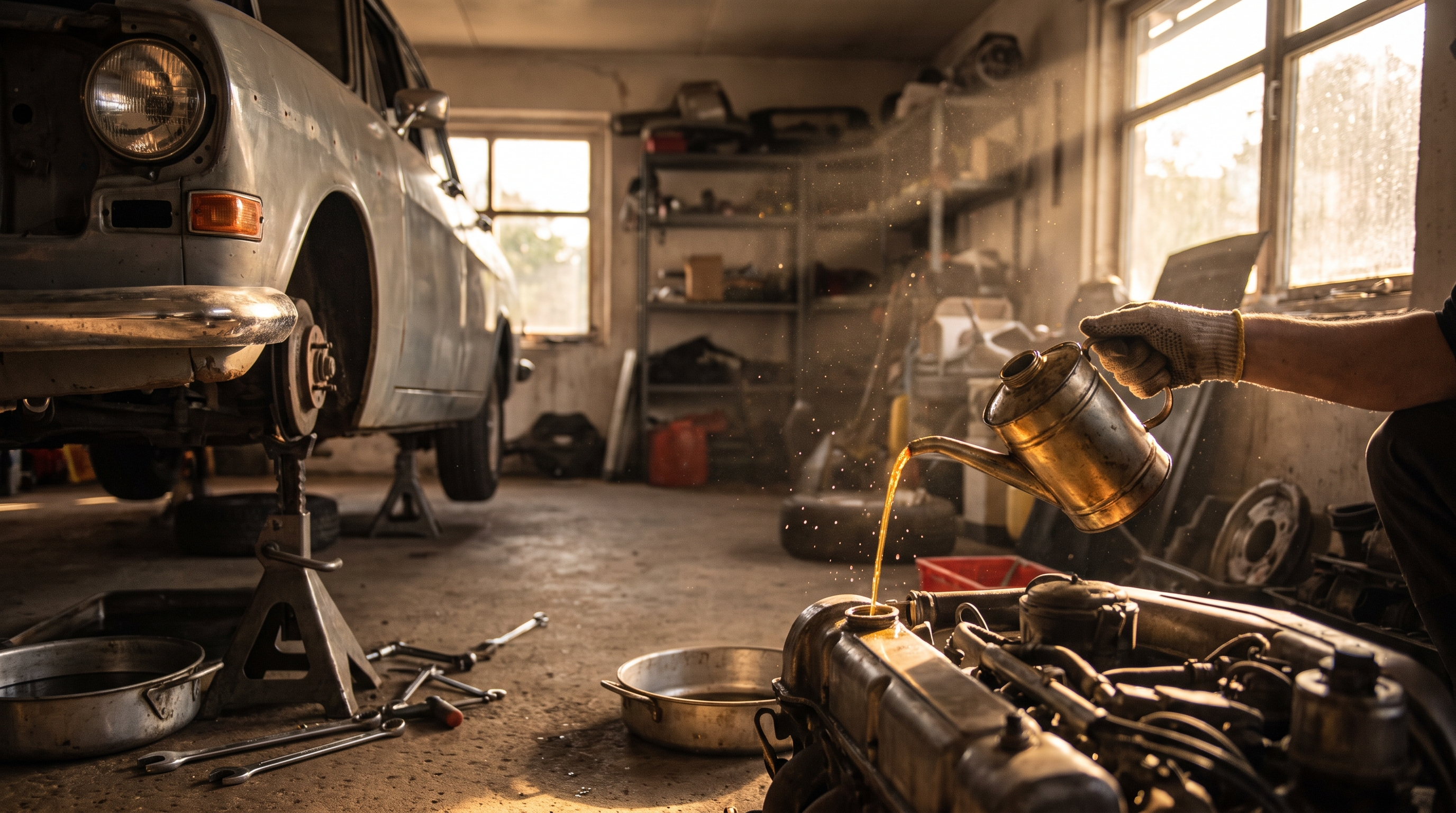
For this exact job we've been reaching for the Humbl Hand-Held Oil Squirt Can — the narrow metal spout gets into tight hinge gaps without soaking the paint or the door card, which is exactly the control you want for a job like this.
Where NOT to Spray
Don't get trigger-happy with the oil can everywhere:
Rubber weatherstripping needs a silicone-based protectant, not oil — oil dries rubber out over time.
Drum brakes or rotors — obviously, never lubricate anything near your braking surfaces.
Serpentine belt itself — lubricate the tensioner pivot if it squeaks, never the belt.
Pro Tip: Make It a Habit
Do this every 6 months or once a season and you'll never hear that groan again. It's the kind of five-dollar maintenance that keeps a car feeling tight and cared-for years past when most people let the little stuff slide.
A car that sounds tight feels tight — and this is the cheapest confidence boost in your whole garage.
What's the squeak on YOUR car that you've just learned to live with? Tell us in the comments — we might feature the worst one next post.
Frequently Asked Questions
What causes squeaks and creaks in a car?
Dry metal-on-metal or metal-on-plastic friction at pivot points such as door, hood and trunk hinges, seat rails and recliner mechanisms, where the factory grease has dried out after years of heat, salt and use.
How do I stop my car doors and hinges from squeaking?
Open every hinge point (both doors, hood, trunk or hatch), apply a drop of oil from a needle-point applicator to each pivot, work it in by cycling the hinge, and wipe the excess. It takes about 15 minutes with no jack or ramps.
Is squeaky weatherstripping fixed the same way?
No. Rubber weatherstripping needs a silicone lubricant, not oil, which would degrade the rubber over time.
Comments