The 10-Minute Under-Hood Check That Saves You From a $2,000 Surprise

Updated: Sep 9
The 10-Minute Under-Hood Check That Saves You From a $2,000 Surprise
Pop the hood, grab a rag, and give me ten minutes. That's all it takes to catch the fluid problem that turns into a tow-truck problem — and yet most drivers go months, sometimes years, without ever checking. Let's fix that today.
Why This Actually Matters
Fluids are your engine's early-warning system. Low oil, cooked coolant, or a slipping brake fluid level don't just show up out of nowhere — they whisper before they scream. The problem is nobody's listening until the dashboard lights up or, worse, something seizes.
Here's the reality check: the average engine rebuild after a low-oil failure runs $3,000-$6,000. A ten-minute Saturday-morning habit costs you exactly nothing but time.
The 5 Fluids You're Checking
1. Engine Oil
Pull the dipstick, wipe clean, reinsert fully, pull again
Oil should sit between the min/max marks — and should look amber-to-brown, not black-and-gritty or milky (milky = coolant intrusion, stop and call a shop)
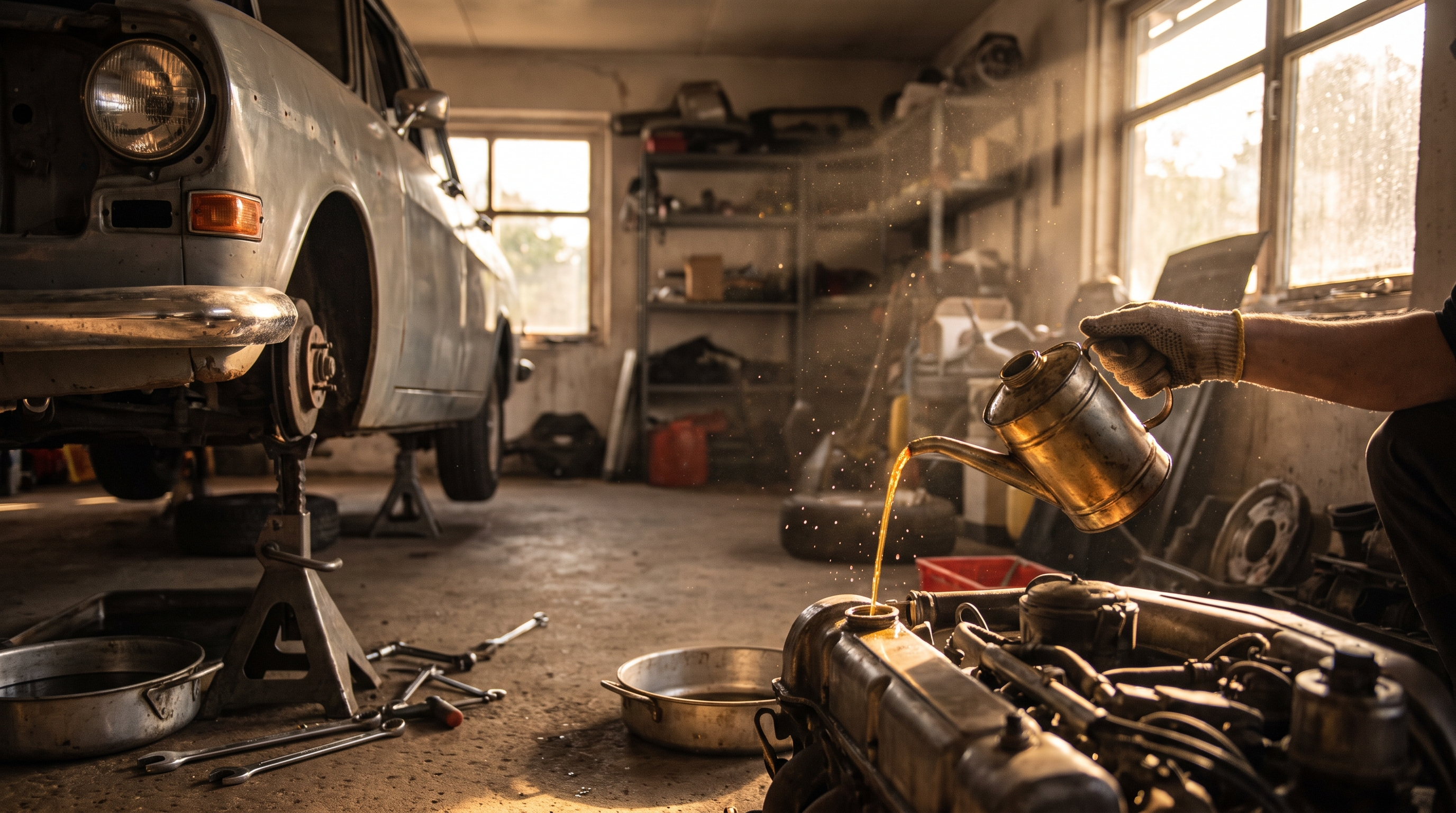
Running low? Don't just eyeball-pour from a jug — a controlled squirt keeps it precise and mess-free
2. Coolant
Check the overflow reservoir level when the engine is cold — never crack the radiator cap on a hot engine
Should be bright and clear (green, orange, or pink depending on your car) — rusty or oily coolant means trouble upstream
3. Brake Fluid
Level should sit near the "MAX" line on the translucent reservoir
A fluid level that's dropped noticeably (with no visible leak) is often the first sign of worn brake pads — the caliper pistons extend further as pads wear, which pulls fluid down
4. Power Steering / Transmission Fluid
Check per your owner's manual — some are checked hot/running, some cold/off
Cloudy, burnt-smelling, or discolored fluid = get it looked at before your next road trip
5. Washer Fluid
Yes, really. It's free, it's five seconds, and nothing kills your visibility (and confidence) faster than an empty reservoir at 70 mph in the rain
The Tool That Makes This Painless
Topping off oil from a full quart jug is how you end up with a slick engine bay and an overfilled sump. A Humbl Hand-Held Oil Squirt Can lets you add oil a few drops at a time, right where you need it, with zero mess. It's the difference between a controlled top-off and a garage floor you're mopping up afterward.
Once you're done checking and topping off, wipe your dipstick and any drips clean — a proper microfiber towel won't leave lint behind on sensitive engine components the way a shop rag will.
Make It a Habit, Not a One-Time Thing
Set a recurring reminder on your phone for the 1st of every month. Ten minutes, every 30 days, is genuinely all it takes to catch 90% of fluid-related failures before they become tow-truck stories. Pair it with a proper Garage Essentials Kit so you're never digging through three drawers looking for the right tool mid-check.
Industry data on preventable maintenance failures via Hagerty.
Bottom line: your engine is talking to you through its fluids — ten minutes a month is all it takes to actually listen.
What's the maintenance check you always put off until it's too late — be honest in the comments.
Frequently Asked Questions
What fluids should I check under the hood?
Engine oil, coolant, brake fluid, power steering fluid and washer fluid. Oil, coolant and brake fluid are the three that prevent expensive failures.
How do I check engine oil correctly?
Pull the dipstick, wipe it clean, reinsert fully, then pull again. The level should sit between the min and max marks and the oil should be amber to brown, not black and gritty, and never milky, which means coolant intrusion and a trip to a shop.
Can I check coolant on a hot engine?
No. Check the overflow reservoir level only when the engine is cold, and never crack the radiator cap hot. Coolant should be bright and clear; rusty or oily coolant means trouble upstream.
How much does a low-oil engine failure cost?
An engine rebuild after a low-oil failure typically runs 3,000 to 6,000 dollars, versus a ten-minute fluid check that costs nothing but time.
Comments