
7 Car Facts So Wild You'll Need To Sit Down (Yes, Even You, Gearhead)

Updated: 5 days ago
7 Car Facts So Wild You'll Need To Sit Down (Yes, Even You, Gearhead)
You know your torque specs. You know your 0-60 times. But bet you didn't know half of this stuff — and it's going to mess with everything you thought you knew about the cars sitting in your own driveway.
1. Mercedes-Benz Basically Invented the Reason You Survive Crashes
That crumple zone absorbing impact energy on every modern car? Patented by Mercedes-Benz engineer Béla Barényi all the way back in 1952. The idea was so far ahead of its time that it took the rest of the industry decades to catch up. Next time you walk away from a fender-bender, you can thank a guy who was sketching this stuff before most automakers even understood what "crash safety" meant.
2. The Three-Pointed Star Isn't Just a Logo — It's a Mission Statement
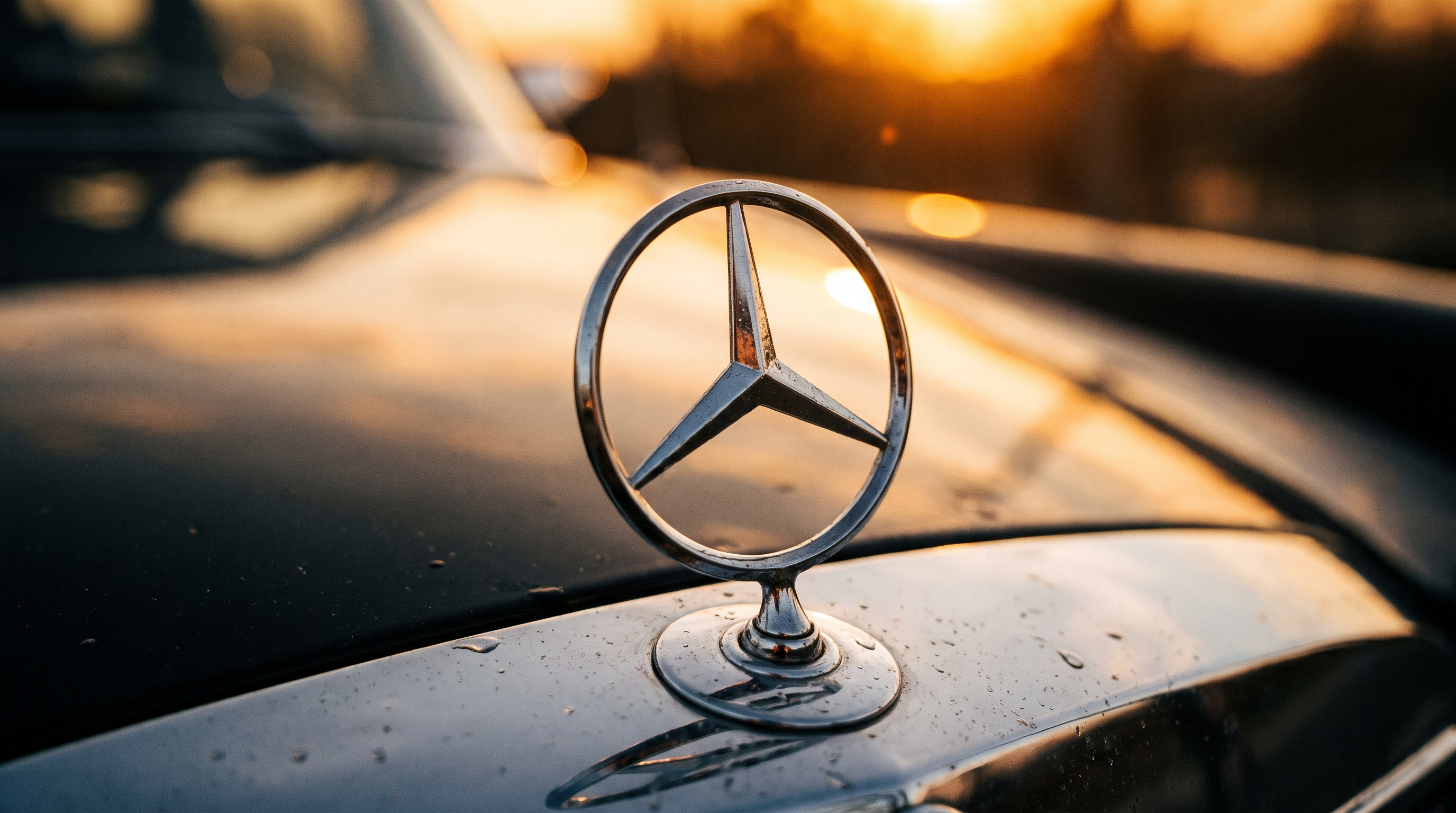
Gottlieb Daimler reportedly marked a postcard to his wife with a star over his house, saying one day his engines would power vehicles on land, sea, and air. Mercedes turned that into the three-pointed star you see gleaming on hoods everywhere today.
Want that same chrome flex on your own ride? Grab the Mercedes-Benz Chrome Hood Star Emblem and put a little of that 1900s ambition on your own front end.
3. BMW's Roundel Was NEVER Actually a Spinning Propeller
Here's the one that'll start a bar fight: everyone "knows" the BMW roundel represents a spinning aircraft propeller against a blue sky, nodding to BMW's early days building aero engines. It's a myth. BMW's own historians confirm the blue-and-white quarters actually come from the flag of Bavaria, the company's home state. The propeller story only caught on decades later thanks to a 1929 ad.
Real origin: Bavarian state colors, rearranged
Fake origin (that everyone believes): spinning propeller blades
Why it stuck: a slick ad campaign outlived the actual history
4. The VW Beetle Started Life With a Government Nickname
Before it was the "Beetle," it was the KdF-Wagen — short for Kraft durch Freude ("Strength Through Joy"), a program-issued name from 1938. Ferdinand Porsche engineered it to be a cheap, reliable "people's car," which is literally what Volkswagen translates to. The bones of that design — air-cooled rear engine, swing-axle suspension — stuck around on Beetles for over 60 years of production.
5. Porsche's First Car Wasn't Gas-Powered At All
In 1900, Ferdinand Porsche built the Lohner-Porsche, an electric car with in-wheel motors — and then followed it up with the Semper Vivus, widely considered the world's first functional hybrid. That's right: the man behind the 911 was out here engineering hybrid drivetrains before the Model T existed.
6. There's a Reason European Headlight Patterns Look "Off" to Americans
European low beams use a sharp cutoff on the right side to light the shoulder without blinding oncoming drivers — while US patterns spread more evenly. If you've ever imported a Euro-spec car and noticed your headlights throw light differently, that's not a bad bulb. It's two entire regulatory philosophies colliding on your garage floor.
7. Your Wheel Studs Are Doing More Work Than You Think
Stock wheel studs are engineered for stock wheels, stock power, and stock driving. The second you add wider wheels, more clamping leverage, or track days, factory studs are working closer to their limit than most people realize. If you're modifying wheel offset or just want serious peace of mind, the Megan Racing 20-pc Extended Wheel Studs give you extra thread engagement and a serious safety margin.
The Bottom Line
Car history is weirder, deeper, and more loaded with myth-busting trivia than most gearheads give it credit for — from crumple zones to fake propeller logos to hybrid drivetrains over a century old.
Which one of these facts just lived in your head rent-free — and which one did you already know? Drop it in the comments.
Source: general automotive history, trends referenced via Hagerty
Frequently Asked Questions
What is the origin of the Mercedes-Benz logo?
The three-pointed star logo represents Gottlieb Daimler's vision of his engines powering vehicles on land, sea, and air, which Mercedes turned into a mission statement symbol.
Why do European headlight patterns look different to American cars?
European low beams use a sharp cutoff on the right side to light the shoulder without blinding oncoming drivers, while US patterns spread more evenly.
Why was the VW Beetle originally called the KdF-Wagen?
The VW Beetle's original name, KdF-Wagen, stands for Kraft durch Freude, which translates to 'Strength Through Joy', a government program-issued name from 1938.
Comments